Why railroad depot postcards are so collectible
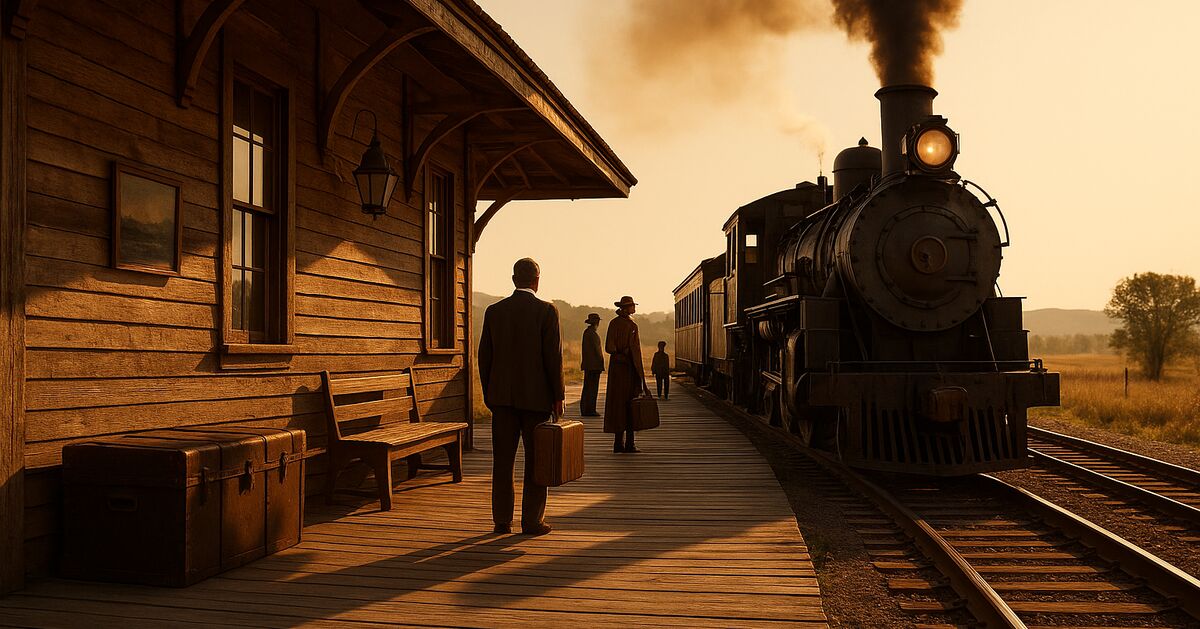
Railroad depot postcards pull you in the moment you pick one up. There is something about a handsome brick station platform, a crowd of travelers in wool coats, and a locomotive breathing steam that feels urgent even a hundred years later. These cards document a world that is almost entirely gone, and that disappearance is precisely what makes them so sought after.
For the complete reference, see my guide to railroad postcards.
The railroad depot as a cultural centerpiece
From roughly 1880 through the 1940s, the depot was often the most important building in an American town. Goods arrived there. Soldiers departed from there. News, mail, and money all moved through the station. Architects were commissioned to design depots that projected civic pride - red-pressed brick, terracotta cornices, arched windows, and ornate waiting rooms were common on even modestly sized lines. Smaller branch-line stops often got standardized plans from the railroad's own engineering department, which creates a fascinating visual consistency collectors love to document.
Because the depot was so central, postcard publishers targeted it heavily during the golden era of postcard production - roughly 1900 to 1930. Newsstands inside the stations sold the cards. Travelers mailed them home to say they had arrived. Local merchants ordered print runs to celebrate the town's connection to the wider world. The result is an enormous surviving body of imagery that touches nearly every railroad line and nearly every community that had one.
Why so many depots are now gone
Understanding the loss is part of understanding the value. Passenger rail traffic began declining in the United States after World War II as the Interstate Highway System expanded and commercial aviation became affordable. The Railway Post Office system, which sorted mail on moving trains, is generally said to have ended operations in the late 1970s. Once those revenue streams dried up, many stations became liabilities rather than assets. Demolition was often cheaper than maintenance, and many depots are believed to have come down between the 1950s and the 1980s.
A postcard showing a depot that no longer exists is a primary historical document. It may be the only surviving visual record of what that building looked like. Local historical societies, library archives, and railroad history organizations actively seek these cards for exactly that reason. Collector demand and institutional demand overlap, which keeps prices healthy across the category.
The different flavors of depot postcard collecting
One reason this niche stays lively is that there are so many angles to pursue. Collectors organize their focus in very different ways:
- By railroad line - Fans of the Chicago, Burlington & Quincy or the Seaboard Air Line will pursue every depot on that specific system. Railroad-specific collecting ties naturally into broader railroadiana communities.
- By state or region - A collector focused on Colorado mountain depots or the Gulf Coast lines is essentially building a regional architectural survey.
- By architecture - Some collectors care less about which railroad and more about the building itself: stick-style wooden stations, Richardson Romanesque brick hulks, Mission Revival stucco depots of the Southwest.
- By postcard type - A real photo postcard (RPPC) of a depot is generally more desirable than a lithographed or halftone printed card of the same subject. If you want to understand why that distinction matters so much, the post on how to tell if an old postcard is a real photo postcard (RPPC) walks through the identification process in detail.
- By era - The Undivided Back era (pre-1907), the Divided Back era (1907-1915), and the Linen era (1930s-1940s) each have devotees. Early undivided-back depot cards are scarcer and command premiums.
- By activity shown - Cards showing crowds, named trains, active platforms, or visible railroad workers tend to bring more than quiet exterior architectural shots.
What drives the price of a specific depot card
Condition matters enormously, as it does across all paper collectibles. A card with a clean, unfaded image, no creases, and intact corners will sell for several times what a worn copy brings. But subject matter and rarity layer on top of condition in ways specific to this category.
Rarity of the subject is the biggest price driver. A depot in a large city like Cincinnati or Denver was photographed repeatedly by multiple publishers, so many copies survive. A depot in a tiny Kansas farming community may have been captured on a single local print run of a few hundred cards, most of which were mailed and lost. Scarce small-town subjects regularly outprice handsome big-city cards.
The railroad's collector following matters too. Lines with large enthusiast communities - the Pennsylvania Railroad, the Union Pacific, the Southern Pacific - generate steady demand for any related material. Obscure short-line railroads have smaller but often intensely dedicated followings who will pay well for rare documentation.
Real photo postcards command a consistent premium over printed cards of equivalent subjects. An RPPC of a depot was typically produced in a very small edition, sometimes by a local photographer using a postcard-back camera. The image quality is photographic rather than screened, and the surviving numbers are low. Dealers and auction results often suggest RPPCs sell for noticeably more than lithographed equivalents for the same station.
Postmarks, messages, and railroad cancels add value rather than subtracting it, as long as the writing does not obscure the image. A card postmarked at the very depot it depicts, or canceled with a Railway Post Office cancel from the same line, is a layered historical artifact. Collectors find that combination exciting.
Common pitfalls when buying depot postcards
A mistake that comes up again and again in collector forums is buying cards without confirming which depot is actually shown. Publisher captions were sometimes wrong, recycled from other locations, or deliberately vague. Before paying a premium for a specific station, try to cross-reference the building against known photographs, local history books, or the railroad's own historical records. University library digital collections and state historical societies have put a surprising amount of material online that can help you confirm identifications.
Another issue is reproduction cards. Beginning in the 1970s and 1980s, historical societies and private publishers reproduced vintage depot images on modern card stock to sell as souvenirs. These reproductions are not without charm, but they carry no collectible value. Learning to recognize modern printing - uniform dot patterns under magnification, bright white card stock, absence of any postal use - protects you from paying vintage prices for a 1980s reprint.
Overgraded condition is a persistent issue at general antique shows and online. "Very good" means different things to a postcard specialist and to a general antique dealer. Develop your own eye for corner wear, surface scuffing, and album-page adhesive residue before you buy aggressively. Joining a postcard collecting club or browsing established dealers helps calibrate your standards quickly.
The connection to broader postcard collecting
Depot cards sit comfortably within the larger world of topographical postcard collecting, which prizes cards for the specific place or structure depicted rather than for the publisher or artistic style alone. If you are new to the hobby and trying to understand how collections are valued and sold, the frequently asked questions page covers the fundamentals of buying and selling vintage cards in plain language.
It is also worth thinking about what to do if you come across a mixed album that includes depot cards alongside other topographical subjects. The guidance on what to do before you sell or split up an inherited postcard album applies directly here - keep the album together, and look carefully and research before deciding anything.
Where depot postcards surface today
Established postcard shows are still the richest hunting ground. Dealers who specialize in transportation subjects will have organized inventory and genuine knowledge. The larger shows - the Chicagoland Postcard Show and regional equivalents - draw dealers from several regions who bring material you simply will not find at a general antique mall.
Online auction platforms carry enormous volume, but quality and accuracy of description vary widely. Searching by railroad name combined with "depot" or "station" turns up a constant stream of material. Setting saved searches for the specific lines or towns you collect is a reliable way to catch new listings before they disappear.
Postcard dealer networks and collector clubs are worth joining early. The Deltiologists of America and similar organizations maintain dealer directories and hold regional exchanges. Members often trade or sell among themselves at prices below retail, and the community knowledge about what is rare, what is misidentified, and what is currently undervalued is useful.
Estate sales and collections purchased as lots are another avenue worth watching. A collector who spent decades assembling a regional depot collection may have gone deep into material that never appears on the open market. Understanding how to evaluate and buy a collection rather than individual cards is a skill that pays off in this niche. The home page's collection-buying resources are a good starting point for thinking through that process.
The historical preservation angle
Beyond pure collecting pleasure, depot postcard collectors serve a real preservation function. These cards end up in regional history collections, railroad museum archives, and historic preservation files. When a community begins a depot restoration project, early photographs and postcard images are among the first things researchers seek. Collectors who have carefully documented their holdings - noting the railroad, the town, the approximate date, and the publisher - create resources that outlast any individual collection.
Railroad stations are often cited as a threatened category of American architecture, and community restoration efforts frequently use postcard imagery as a visual reference. Knowing that a card you bought at a show might someday inform a building restoration adds a dimension to the hobby that purely decorative collecting does not offer.
Getting started or going deeper
If you are just beginning to explore this category, start narrow. Pick one railroad line that ran through your home state, or one county's worth of depots, and learn that territory thoroughly before expanding. Depth beats breadth for building genuine expertise and for spotting undervalued material.
If you are an experienced collector who has stumbled onto a significant group of depot cards - through an estate, a lot purchase, or a collection offered to you - take the time to research before selling. Rare small-town RPPCs are easy to underprice if you are not familiar with current demand. Check recent completed auction results for comparable subjects, and consider reaching out through the contact page if you want to talk through what you have found.
Railroad depot postcards reward patience, regional knowledge, and a genuine interest in the history behind the image. The cards are beautiful objects, but the stories they carry - of places that mattered, buildings that stood, and people who traveled through them - are what keep serious collectors coming back for more.
About this guide
- Research: Mike Ferreira
- Last reviewed: October 26, 2026
- Claim audit: 5 consequential claims checked against the sources below on Oct 15, 2026; wording the sources could not carry was removed (claim-by-claim)
- Spotted an error? Tell me and I will fix it.
Revision history (2)
- Oct 26, 2026 - Revised so the advice matches how I buy: whole collections, kept together and described as they are.
- Oct 15, 2026 - Pre-publish editorial QA: 2 flagged, 2 softened; claim audit: 5 claims, 4 rewritten
A question first?
Ask before you send anything
Not sure the collection is worth a quote, or what to photograph? Just ask. Every message comes straight to me, and I answer each one myself.