What I buy
Collections and large lots of old postcards
If it's a postcard and it was printed before about 1960, I want to hear about it. Whole albums and boxes most of all, with real photo postcards of American towns at the top of the list.
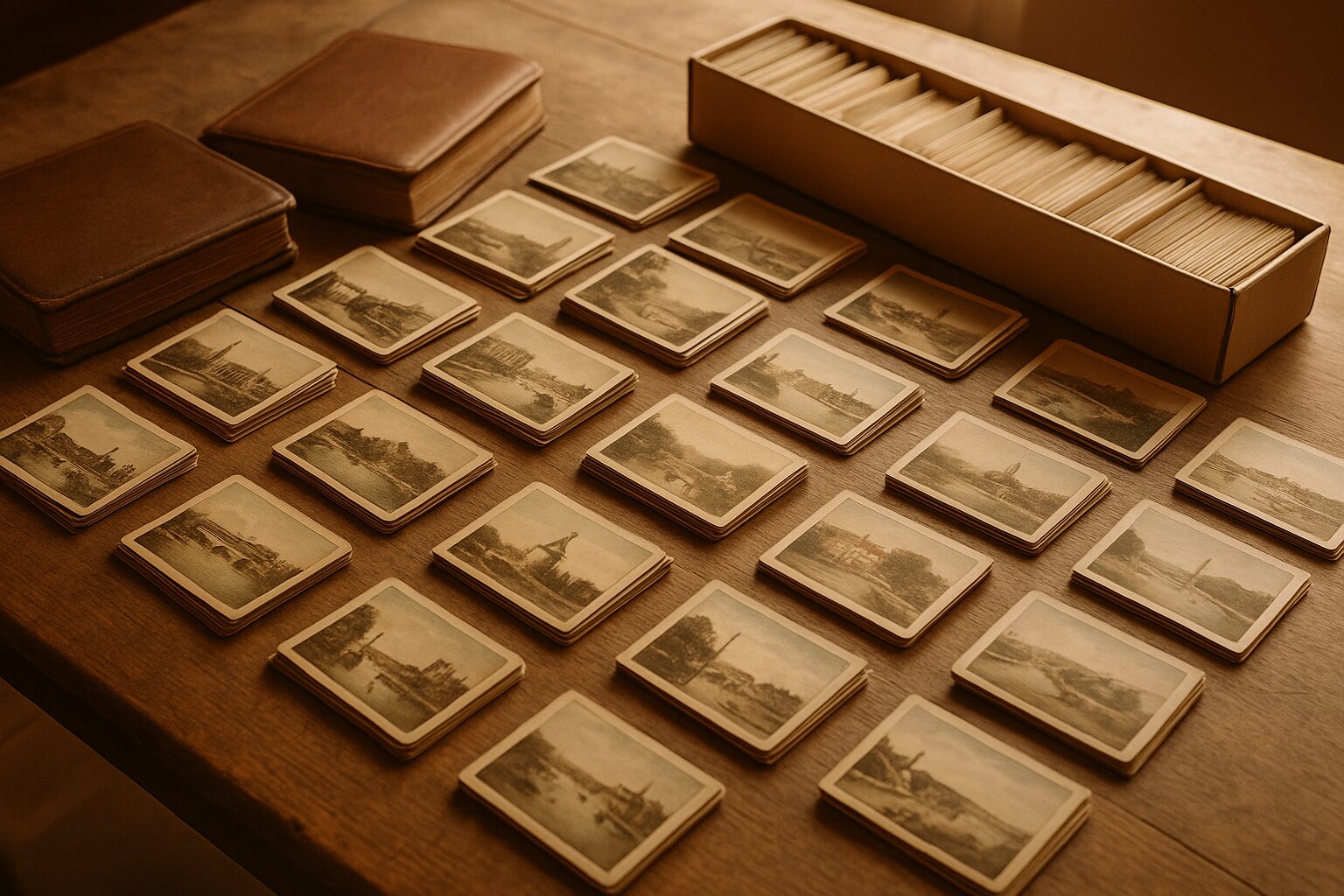
The short answer: I buy entire collections and large lots of vintage and antique postcards from anywhere in the United States, from a few hundred cards to tens of thousands. Real photo postcards (RPPCs) are what I want most, especially small-town street scenes, people at work and early transportation. I also buy holiday and greeting cards, topicals, and mixed estate accumulations. A smaller group of strong real photo cards is welcome too. If you're unsure whether yours qualify, describe them anyway: a quick look costs you nothing, and I'll tell you plainly whether the collection is something I can make an offer on.
And if you're still unsure after reading this page, ask me anyway. I'd honestly rather look at a box of ordinary cards and tell you so than leave you wondering. You don't need to know any of the collector terms here to get a straight, friendly answer from me.
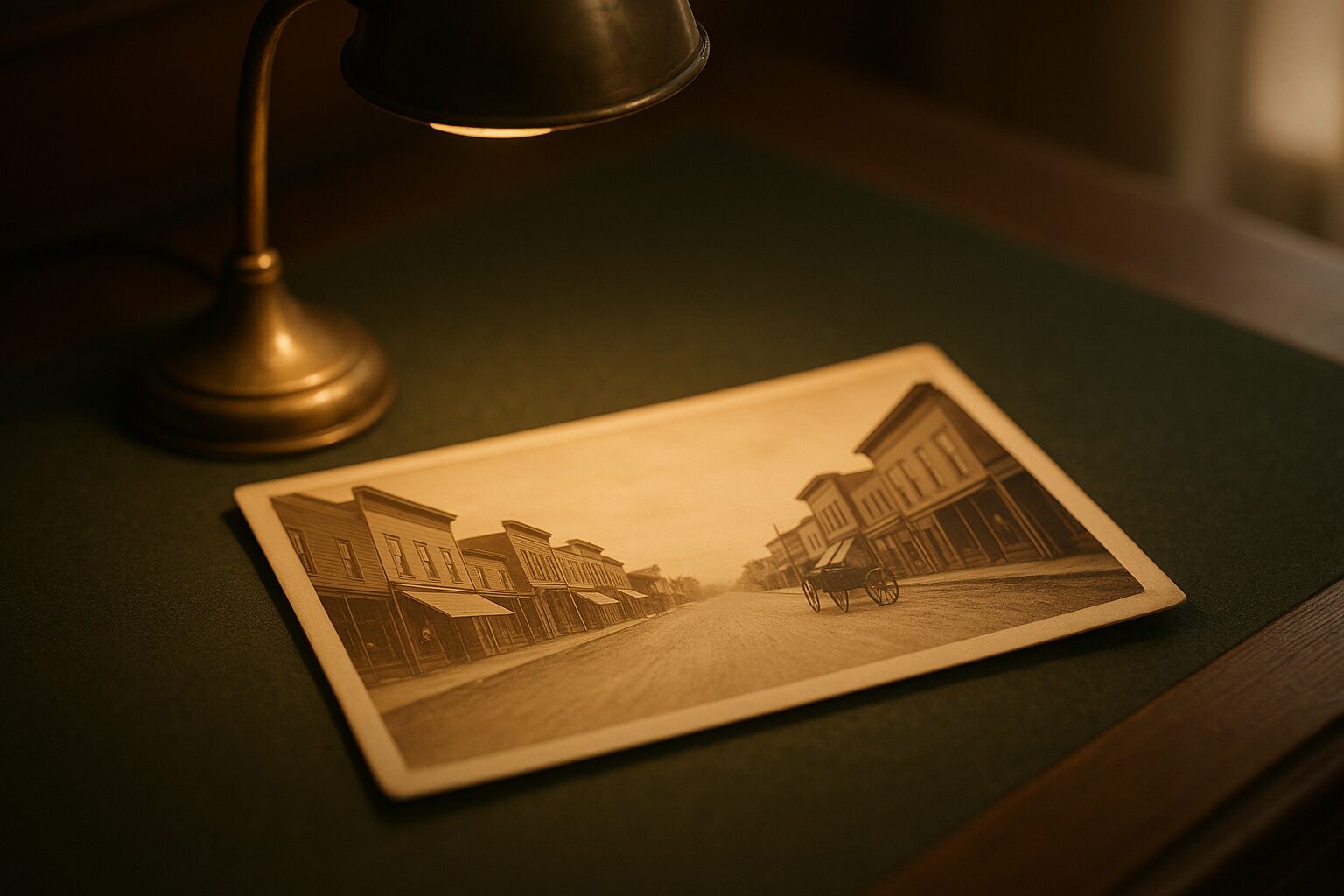
Real photo postcards
Photographs printed on postcard stock. The heart of most good collections, and the cards I look for first.
Read more →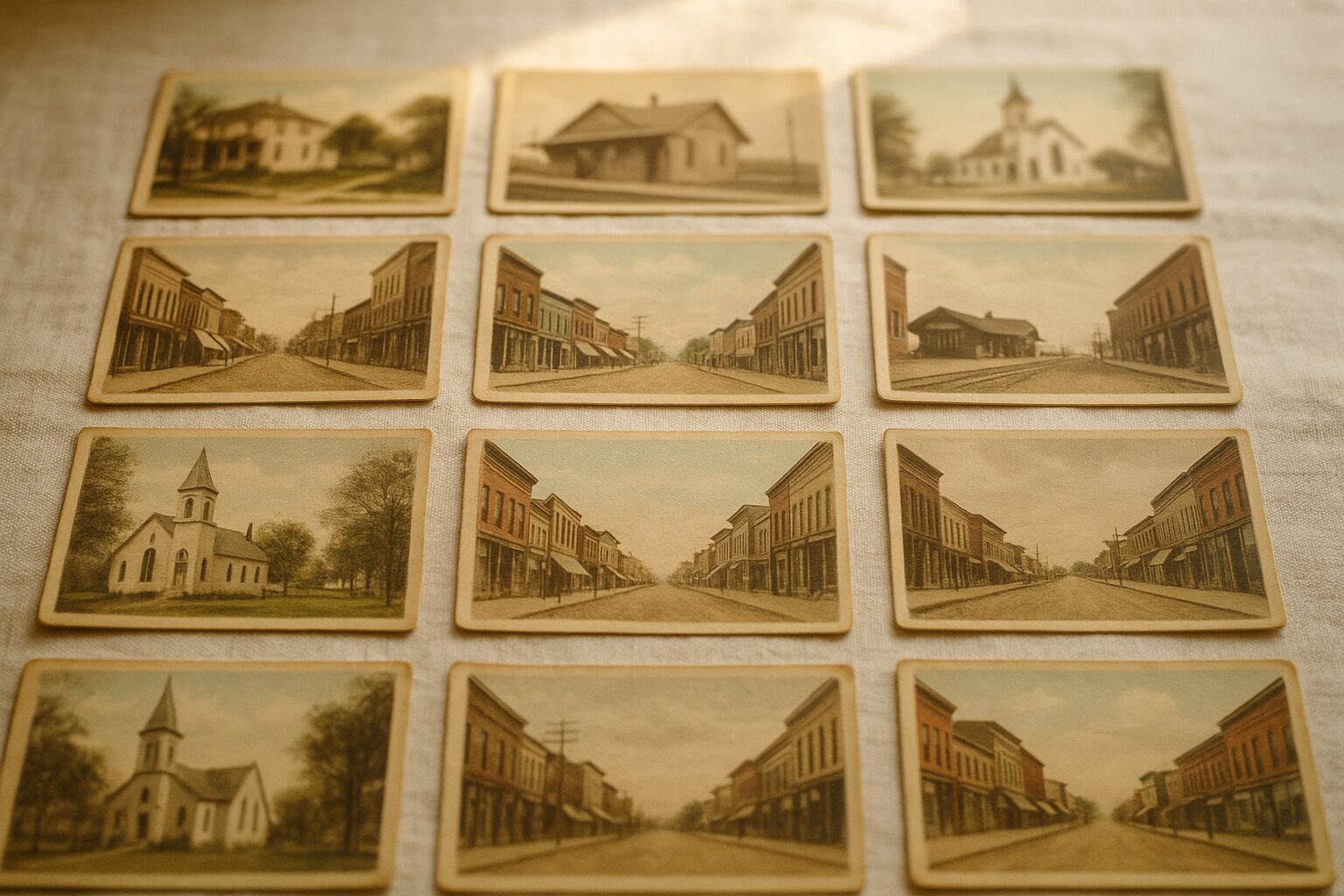
Town and main street views
Depots, hotels, banks, schools and main streets from small places, real photo or printed.
Read more →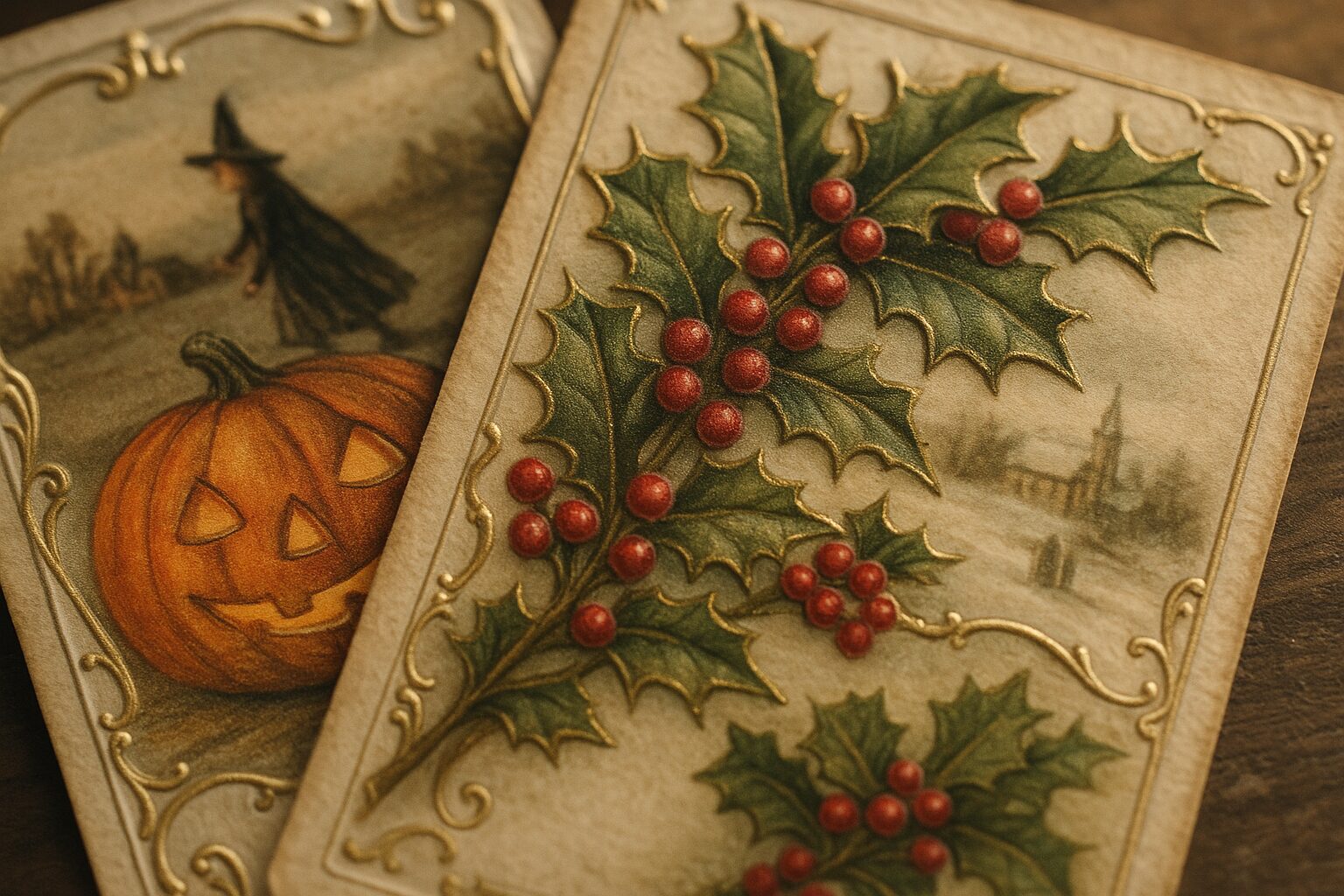
Holiday and greeting
Embossed and artist-signed Halloween, Christmas, Easter, Thanksgiving and New Year cards.
Read more →
Topicals and advertising
Trains, early cars, occupations, advertising, disasters, expositions, fairs and parades.
Read more →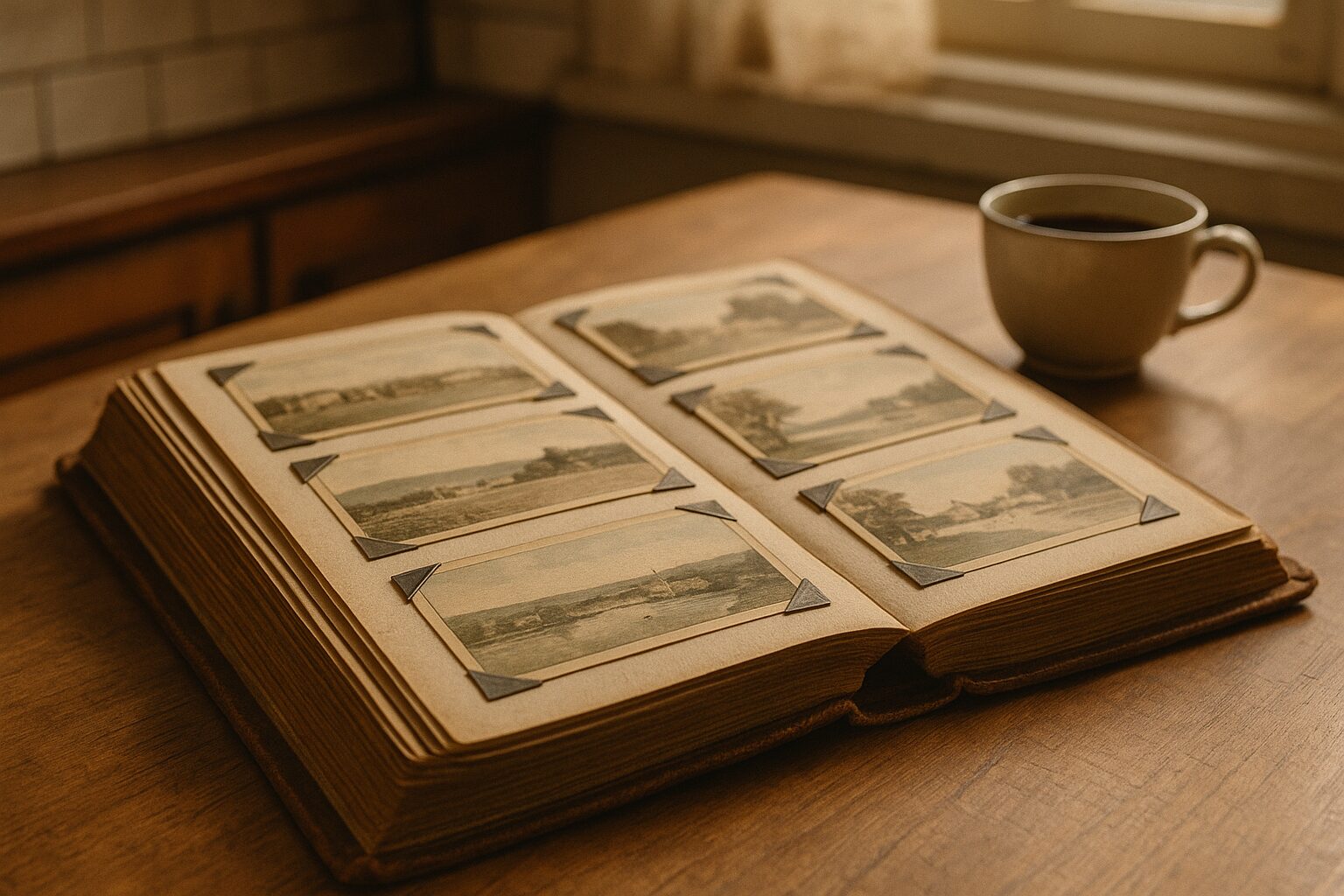
Inherited and estate lots
The family album, the trunk from the attic, the boxes nobody has opened since the 1970s.
Read more →At a glance
What makes a card valuable
Type, era and subject decide most of what a card is worth, and condition decides how much of that is left. These are general patterns, not prices: I quote the actual cards in your photos.
| Type | Era | Subjects collectors want | Condition | What to expect |
|---|---|---|---|---|
| Real photo postcards | About 1903 into the 1950s | Small-town streets, storefronts, people at work, early transportation, local events | A clear, sharp image; creases and stains on the front matter most | Usually the most valuable cards in a collection, especially of identifiable small places |
| Early printed cards | Before March 1907 (undivided backs) | Early views, expositions, private mailing cards | Writing on the front is normal for this era | Generally scarcer than later printed cards |
| Holiday and greeting cards | Mostly about 1907 to 1915 | Halloween above all, then Santa, Thanksgiving and other embossed designs | Crisp embossing, bright color, no album damage | Early Halloween cards are in strong demand; ordinary greetings are common |
| Topicals | Any era, strongest before about 1930 | Railroads and depots, early cars, aviation, advertising, disasters, fairs | A clean front with readable details | Demand follows the topic and how specific the picture is |
| White border views | About 1915 to 1930 | Small towns and main streets rather than big-city landmarks | Sharp corners, no creases | Mostly modest; small-town views do better |
| Linen cards | About 1930 to the early 1950s | Roadside diners, motels, gas stations and advertising with readable signs | Bright, unfaded color | Most are common; strong roadside and advertising subjects stand out |
| Chrome cards | From about 1939, dominant after 1950 | Little demand outside a few specific subjects | Usually found in good shape | Very little on their own; I take them as part of an older collection |
I also buy
- Albums, whole. Leave the cards in the pages. An intact album tells me where and when it was put together, which helps the quote.
- Dealer stock. Boxes of sleeved and sorted cards from a former dealer or show table, including the shoebox of "commons" behind the counter.
- Mixed accumulations. Cards bought by the box at auctions and estate sales over the years, never sorted.
- Early printed cards. Undivided backs from before 1907, private mailing cards, and early exposition souvenirs.
- Linen-era cards from the 1930s and 1940s, especially roadside, diners, motels and advertising, as part of a larger lot.
- Foreign cards that come mixed into an American collection. I take them with the rest.
- Related paper that travels with a postcard collection: old photographs, stereoviews and trade cards. Mention them on the form and I'll tell you whether I can include them.
What I usually pass on
I'd rather tell you up front than waste your time.
- Modern cards on their own. Glossy chrome cards from about 1960 onward, unused tourist cards and recent souvenir sets have very little resale value by themselves. Inside a larger older collection they are fine, and I take them with everything else. A box of only modern chromes I'll usually decline.
- Reproductions. Reprinted "vintage style" cards and modern copies of old images.
- Very small lots of common cards. Twenty printed views of big cities and national parks rarely justify the cost of shipping both ways.
- Heavily damaged cards on their own. Water damage, mold, missing pieces. A few damaged cards in a collection are normal and expected.
Not sure which side of the line yours fall on? Send the form anyway. Telling you something isn't worth selling is part of the job.
One more category worth mentioning: postcards that have been cut, trimmed or glued to other paper, such as scrapbook pages. Collectors strongly prefer cards in their original form, so those are worth much less. If a scrapbook is otherwise interesting, for example full of real photographs from one town, mention it anyway. Sometimes the scrapbook itself is the story.
How I judge a lot
What moves a quote up
Four things matter more than anything else when I look at your photos.
Photo, not print
Real photographs
A real photo card of a street or a storefront is usually worth several times a printed card of the same subject.
Small places
Towns few people photographed
A crossroads village with one general store is scarcer than a state capital, so it's often the more wanted card.
People and action
Something happening
Workers at a mill, a parade, a fire company with its wagon. Life in the picture beats an empty landscape.
Condition
Clean corners, no creases
Writing and postmarks on the back are fine and sometimes a plus. Creases, tears and stains on the front cost the most.
What happens to the cards I can't use
Every collection has some cards that wouldn't sell on their own: torn views, heavily water-stained cards, modern tourist cards, duplicates by the dozen. If they arrive as part of a collection I bought, they are simply part of the lot. You aren't charged for them and they never reduce the quote below the price you accepted.
Occasionally a collection arrives with whole boxes of something I can't use at all, such as cartons of recent tourist cards or blank stationery. If your photos show that, I'll say so in the quote and tell you which boxes to leave out. Otherwise, please ship the collection complete; the quote assumes everything you described.
The goal is a clean, simple sale where you know exactly what you're sending and what you're being paid for.
Postcards and the paper that travels with them
A postcard collection rarely comes alone. Boxes from an estate often hold snapshots, cabinet card portraits, stereoviews, trade cards, letters, maps, railroad timetables and souvenir booklets. I focus on postcards, but I'm always happy to look at the rest and tell you what I think it is. If I can't include something in my offer, I'll say so, and often I can point you toward the kind of collector or dealer who would want it.
Whatever is in the box, the rule is the same: describe it, photograph it, and nothing ships until you agree.
Mixed lots are normal
Almost every collection is a mix: a core of older cards somebody cared about, plus later additions, duplicates and souvenirs. That's fine. I quote the whole lot as one number, which means you don't need to separate anything, and the common cards ride along with the good ones.
My offers are for complete collections, exactly as they are. The cards with little value on their own are simply part of the one price, so please don't pull anything out: send everything and let me do the sorting. Cards removed from a collection are harder to judge, and an offer is only fair, to you and to me, when it covers the whole thing.
When you aren't sure what you have, describe what you can see and photograph a few pages. The dating guide helps if you want to know roughly when the cards were made, but you don't need to work it out before asking for a quote.
A simple way to think about it: I'm pricing the collection you have, not the collection you wish you had. Describe it honestly, including the parts you suspect are ordinary, and the quote will be one you can rely on when the box arrives.
You never pay to ship, and you never sell at a price you didn't agree to
Once you accept the quote, I email a prepaid, insured shipping label. When the postcards arrive I go through them and pay you within two business days.
If what arrives is different from the photos and my offer has to change, you can say no, and I ship everything back to you at my expense.
- PayPal
- Check by mail
- Zelle
- Venmo
Frequently asked questions
- What kinds of old postcards do you buy?
- Real photo postcards above all, especially small-town streets, storefronts, occupations and transportation. Also town views, embossed holiday cards (Halloween especially), topicals such as railroads, early cars, advertising, disasters and expositions, and whole inherited or estate collections. See what I buy.
- Do you buy chrome or modern postcards?
- Inside a larger older collection, yes, I take them with everything else. A collection of only glossy chrome cards from about 1960 onward has very little resale value, so I usually decline those on their own.
- Do you buy foreign postcards?
- When they come mixed into an American collection, yes. My focus is United States cards, but I take foreign cards along with the rest of the lot.
- What if I have no idea what I have?
- That's a very common situation, and it's fine. Describe what you can see in plain words (albums or boxes, roughly how many, black and white photographs or colored prints) and add a few photos. I'll tell you what it is.
- Do you buy small lots or single cards?
- My focus is collections and large lots, but a smaller group of good real photo postcards, early holiday cards or strong topicals is welcome. A handful of common printed views usually isn't worth shipping, and I'll tell you so honestly.
- Should I send the albums or take the cards out?
- Send the albums as they are. Removing cards can damage them, especially if they are glued or held by old photo corners, and an intact album tells me more about the collection.
A question first?
Something here you want to ask about?
Send a question about a card, an album or a whole estate. You don't need to be ready to sell to ask.