Values guide
What are old postcards worth?
The honest answer is: most are worth a little, some are worth a lot, and the difference is usually not obvious at first glance. Here is how collectors and buyers actually think about value.
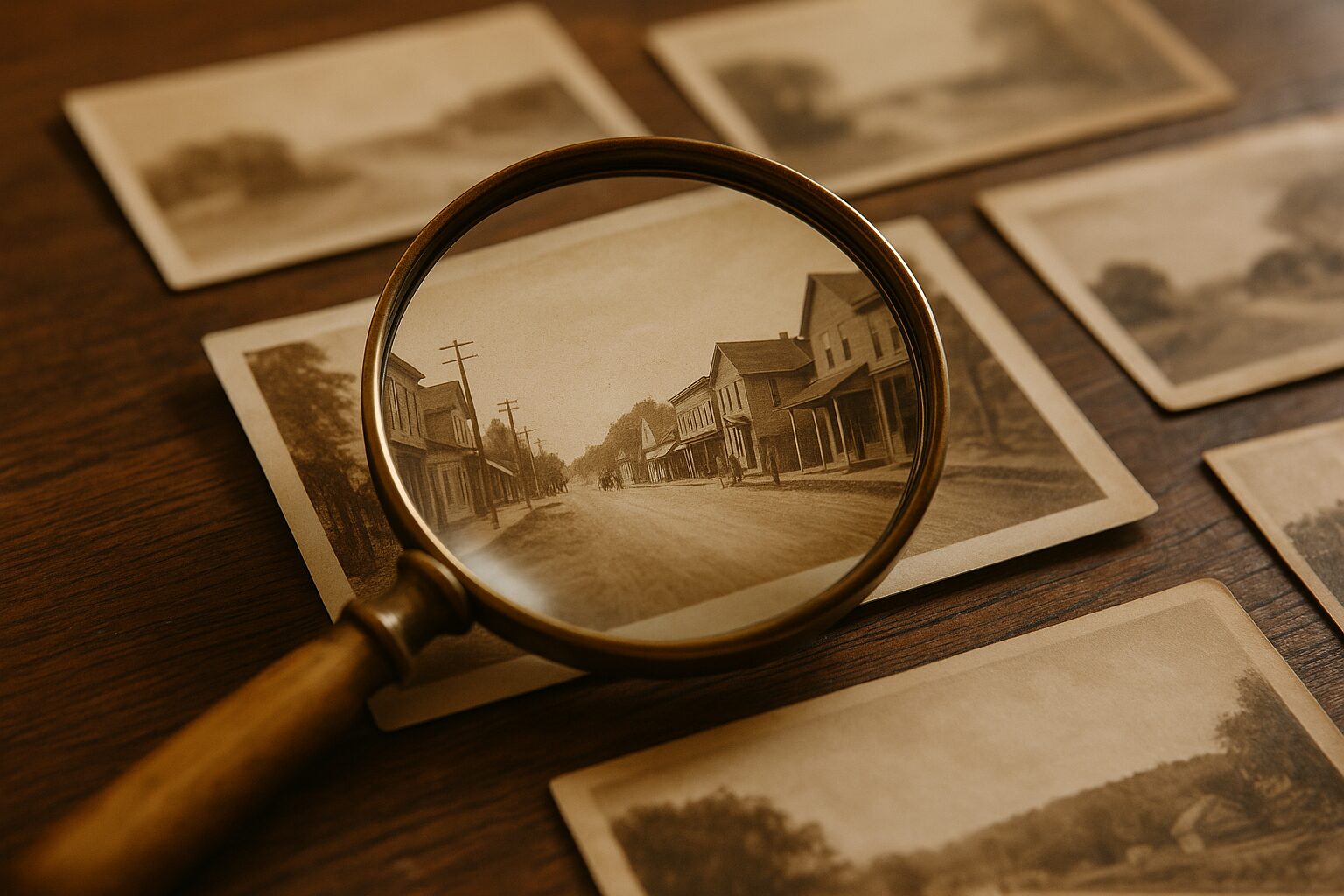
In short: the majority of old postcards, especially printed views of cities, landmarks and national parks, and most cards from the 1930s onward, sell for well under a dollar each when bought in quantity. Real photo postcards of identifiable small towns, businesses, occupations, transportation and events are the main exception, and many are worth several dollars to tens of dollars each, with rare ones worth considerably more. A collection's value usually rests on a minority of its cards.
Want the quick yes or no first? See are old postcards worth anything. This page goes deeper into the eight things a buyer checks.
Why most postcards are common
Postcards were the social media of the early 1900s. The Post Office handled hundreds of millions of them a year at the peak, and people saved them in albums by the thousand. Printed views of popular places were produced in huge runs, and huge numbers survive. Supply is large, and for common cards it simply outstrips demand.
That is not a reason to throw them away. Common cards still sell in bulk, and a large collection of ordinary views adds up. But if you have read that "old postcards are valuable", that is true of particular cards, not of postcards in general.
What makes a card worth more
Almost every valuable postcard has some combination of the following. The table below sets them out, and the stamp cards further down cover the four I weigh most heavily when I look at your photos.
- It is a real photograph, not a printed image. Many were made in tiny runs by local photographers.
- It shows somewhere small: a village, a crossroads store, a railroad stop that no longer exists.
- It shows something happening: people at work, a parade, a fire, a flood, a crowd at a depot.
- It is a sought-after topic: Halloween, early automobiles and garages, railroads, mining, aviation, advertising.
- It is in good condition: sharp corners, no creases or stains, bright and clear.
Why selling one card at a time is not always better
You may see individual cards listed online at impressive prices. Asking prices are not sale prices, and many listings sit unsold for months. Selling cards singly can bring in more per card, but only for the good ones, and only if you do the work: identifying each card, photographing front and back, writing descriptions, answering questions, packing and shipping each order. For a few hundred cards that is many evenings of work.
A buyer of whole collections pays less than the eventual retail price of each card, because the buyer takes on that work and the risk that some cards never sell. In exchange, you get one fair payment for everything, including the common cards that would be hard to sell on their own. Which route is right depends on how much time you have and how much you enjoy the process.
How I put a number on a collection
I estimate how many cards fall into each group (common printed views, linens and chromes, better printed cards, real photo cards, and standouts), apply what each group realistically brings, and look closely at any cards that could be worth substantially more on their own. Condition adjusts everything. The quote you receive is one figure for the lot, with a short note on what drove it.
Sources and further reading
The value checklist
What drives the price of an old postcard
Read across each row. A card that scores well on several rows is the kind I hope to find in your collection.
| Factor | Why it matters | What to look for |
|---|---|---|
| Photo or print | Real photographs were often made in small runs; printed cards in huge ones. | No dots under a magnifier, a paper maker's name in the stamp box. |
| Place | Small places had few cards made, and collectors of that area still want them. | Villages, hamlets, railroad stops, rural post offices. |
| Subject | Activity and people make a card a document of its time. | Storefronts, workers, vehicles, crowds, events. |
| Topic | Some subjects have deep collector demand of their own. | Halloween, depots, early cars, mining, aviation, advertising. |
| Era | Earlier cards are generally scarcer than later ones. | Undivided backs before 1907; divided backs to about 1915; white borders after. |
| Condition | Damage on the front lowers value most. | Sharp corners, no creases, tears, stains or album glue on the picture. |
| Identification | A collector needs to know where and what. | A caption, readable signs, a clear postmark or a helpful message. |
| Grouping | A focused set can be worth more together. | Many cards of one town, county, railroad or topic. |
Most important
The four factors I weigh most
If you only remember four things from this page, make it these.
Photo
Real photographs
The single biggest divider between a common card and a valuable one.
Place
Small and specific
Fewer cards made means more collectors chasing each one.
Story
Something happening
Work, trade, travel, celebration or disaster in the picture.
Shape
Clean and intact
Corners and creases matter. Writing on the back does not.
A worked example
Imagine a typical family collection of about 1,500 cards in three albums and a shoebox. Looking through it, you might find roughly 1,100 printed views of cities, resorts and landmarks, 200 linens and chromes from later trips, 120 holiday greetings, and 80 real photo cards, a dozen of them small-town main streets with people and wagons.
Most of the value in that collection would sit in the 80 real photos, and especially in the dozen strong street scenes. The holiday cards would add a meaningful amount if several were good Halloween designs, much less if they were mostly Christmas and birthday greetings. The 1,300 common printed cards and later cards would count, but at a modest rate per card.
That pattern is common, and it is why I ask for a few photos of the best cards and a few random album pages. Together, they let me see both the standouts and the bulk.
Every collection is different, of course, and the only way to know what yours is worth is to look.
Writing, stamps and postmarks
People often worry that a message on the back ruins a postcard. It does not. Most collectors are happy with used cards, and a message can add interest: it may name the town, mention an event, or simply give a glimpse of daily life a century ago.
The stamp itself is rarely valuable on early postcards; most were common one-cent issues. Postmarks are more interesting. A clear cancel from a small or long-closed post office is collected in its own right, and it can help identify an unlabeled view.
What does hurt value: tape, glue and paper residue on the front, heavy creases across the picture, missing corners, water stains and mold. A little corner wear and some soiling are expected on cards this old, and I allow for normal age in every quote.
And if you are curious about a particular card, ask. I am always glad to explain what makes one card more wanted than another.
You never pay to ship, and you never sell at a price you didn't agree to
Once you accept the quote, I email a prepaid, insured shipping label. When the postcards arrive I go through them and pay you within two business days.
If what arrives is different from the photos and my offer has to change, you can say no, and I ship everything back to you at my expense.
- PayPal
- Check by mail
- Zelle
- Venmo
Frequently asked questions
- What are old postcards worth?
- Most printed views, and most cards from the 1930s on, are worth well under a dollar each in quantity. Real photo postcards of identifiable small towns, businesses, occupations, transportation and events are often worth several dollars to tens of dollars each, and rare ones more. The values guide explains why.
- Why not sell them one at a time online myself?
- You can, and for the best cards it may bring more per card. It also means identifying, photographing, listing, answering questions and shipping every card separately, and many listings never sell. Selling the whole collection at once trades some of that upside for one fair payment and no work.
- Do you buy chrome or modern postcards?
- Inside a larger older collection, yes, I take them with everything else. A collection of only glossy chrome cards from about 1960 onward has very little resale value, so I usually decline those on their own.
- Are postcards with writing on the back worth less?
- Generally no. Most collectors are happy with used cards, and a message or a clear postmark can add interest. What lowers value is damage to the front: creases, tears, stains, tape or glue.
- What if I do not like the offer?
- Then you simply say no. Before anything ships, declining costs nothing. After the cards arrive, if what I find differs from the description and my offer changes, you can decline the revised offer and I ship everything back to you free, insured.
A question first?
Something here you want to ask about?
Send a question about a card, an album or a whole estate. You don't need to be ready to sell to ask.