Black Americana postcards: value, context, and what sells today
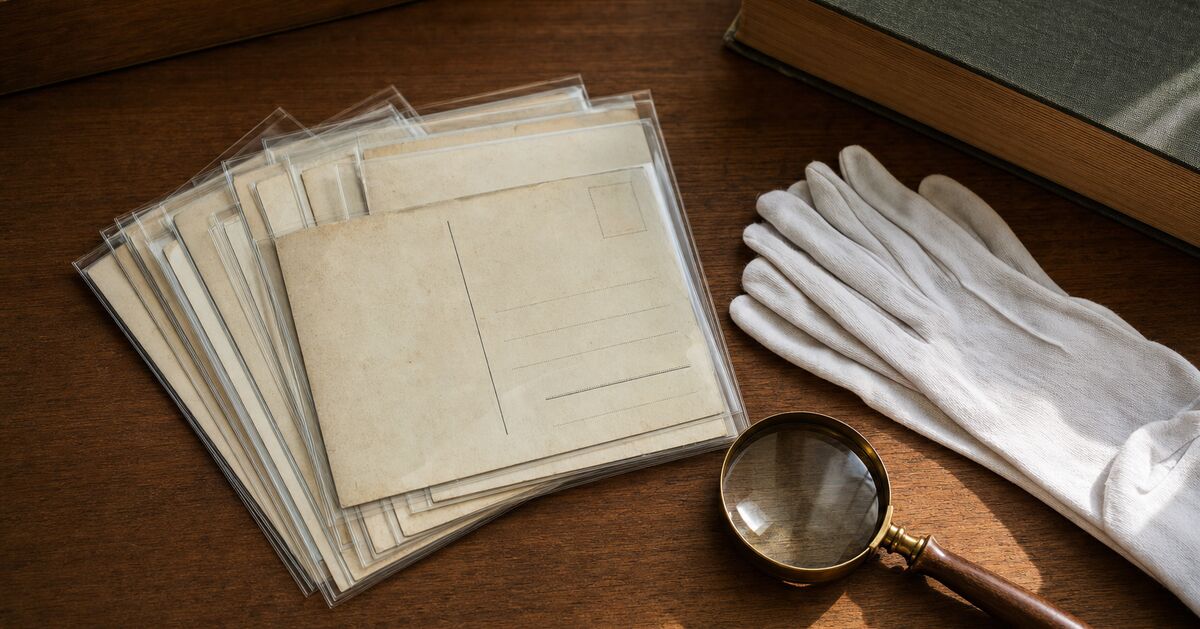
Black Americana postcards can be genuinely valuable, with prices varying widely depending on rarity, artist signature, and subject matter, while other cards in the category are difficult to sell or get removed from major platforms. The difference between a card that brings strong money and one that's essentially unsellable comes down to a handful of factors: historical significance, artistic authorship, documentary value, and whether the imagery crosses a line that even seasoned collectors recognize as beyond the pale. This guide lays all of that out plainly.
Why Black Americana postcards exist as a collecting category at all
The postcard era that historians care about most ran roughly from the 1890s through the 1940s. During that span, American popular culture produced an enormous volume of printed material that reflected the racial attitudes of the time - attitudes that were, by any honest measure, deeply unjust. Black Americana postcards are part of that record.
Collectors and historians treat them as primary source documents. A card mailed from a small Georgia town in 1908 with a handwritten message on the divided back tells you something real about the social world the sender and recipient lived in. Museums, university libraries, and private collectors acquire these cards for the same reason they acquire other uncomfortable artifacts of American history: because understanding where the country has been is part of understanding where it is now.
That's not a justification for everything in the category. It's an explanation for why the category exists and why it draws serious scholarly and collector interest. If you've inherited a collection and found cards like these inside, you're not the first person to wrestle with what to do with them.
What actually drives value in this category
Value in Black Americana postcards follows the same logic as value in any other postcard category - rarity, age, condition, publisher, and subject matter - but a few factors are specific to this niche.
Artist authorship matters enormously. Some of the most sought-after Black Americana cards were drawn by identified artists whose work is recognized across multiple postcard categories. Artist-signed postcards, as a general rule, command a premium over unsigned or anonymously published work, and that principle is especially strong here. A card signed by a known illustrator - or attributable to one by style, publisher, and series - will sell for multiples of what an equivalent unsigned card brings. The guide to artist-signed postcards covers the broader principle well.
Publisher and era of printing. Cards from the Golden Age of postcards (roughly 1900 to 1915) printed by recognized publishers tend to hold more historical and collector interest than later lithographed or linen-era imitations. Publisher marks on the back can often narrow a card's production date to within a few years. Cards from established publishers - including German-printed cards from before World War I, which were often of superior lithographic quality - are generally valued above anonymous American imprints from the same period. The guide to German-printed postcards explains why that pre-war German printing quality matters so much to condition-focused buyers.
Documentary and geographic specificity. A card that documents a real place, a real event, or a real person has more historical weight than a generic comic illustration. A real photo postcard (RPPC) showing an actual Black family, a Black-owned business, or a Black community gathering - even one with a caption someone added that reflects period prejudice - is a primary document in a way that a mass-produced caricature simply is not. Real photo cards of Black American subjects are among the most actively collected and historically significant cards in this entire field. If you have cards like that, the guide to real photo postcard values is essential reading.
Condition. As with every category, condition cuts price sharply. A card with writing across the image, heavy corner wear, soiling, or creases will sell for a fraction of what a clean example brings. My postcard condition guide lays out the grading language dealers use.
Subject matter within the category. Even within Black Americana, there's a wide spectrum. Occupational real photo cards showing Black workers, tradespeople, or professionals are considered documentary and historically important. Cards depicting Black performers, musicians, or athletes of the era have both historical and entertainment-history value. Cards that simply deploy caricature for the sake of humiliation - with no geographic, biographical, or documentary anchor - are at the low end of collector interest even when they are old.
What makes a card essentially unsellable today
This is where I want to be direct, because it's the part of this subject that's easiest to get wrong.
Age alone does not make a card acceptable to sell or collect. A card printed in 1910 that reduces Black people to a single degrading stereotype with no historical, geographic, or artistic context beyond the image itself is a hard sell - not because it isn't old, but because the collector market has shifted. Dedicated Black Americana collectors, who are a serious and knowledgeable group, are generally interested in cards that reveal something about history, document real people, or represent a recognizable artistic tradition. Cards that exist purely as vehicles for dehumanization, with nothing else to say, have a much smaller audience.
Beyond collector taste, there are practical realities. eBay, a major marketplace for postcards, has content policies that restrict or prohibit the sale of certain categories of derogatory material, so sellers should check current policy before listing items in this category. Cards that depict graphic violence, extreme sexual caricature, or content that combines racial imagery with explicit threat or degradation are regularly removed. If you're thinking through selling postcards on eBay, it's worth reading their current policies before listing anything in this category.
Postcard shows are a different environment - dealers who specialize in Black Americana attend major shows, and in-person transactions give both parties more context - but even there, the most extreme material circulates rarely and uneasily. The guide to postcard shows and dealers gives a sense of how that world works.
The honest answer to "is this sellable?" depends on what's actually on the card. A real photo of a Black community event from 1912 - yes, there's real demand. A comic linen card from 1940 showing a lazy stereotype - limited demand, and some platforms won't list it. A card whose only content is a graphic dehumanizing image with no historical anchor - you will struggle to find a responsible buyer.
The real photo postcard question
Real photo postcards depicting Black Americans deserve their own section because they operate differently from printed illustration cards.
A real photo card is a contact print made directly from a photographic negative onto postcard paper, meaning it is the only existing copy of that photograph. When the subject is a Black American individual, family, or community - a portrait, a front porch, a church gathering, a school, a business - that card is potentially a unique historical record. Many Black American families of the early twentieth century did not have their photographs preserved in institutional archives. A postcard-format photograph may be the only surviving image of that person.
That reality gives these cards a different moral and collector weight than printed caricature cards. Serious collectors, historians, and organizations focused on African American genealogy and history actively seek these out. High-quality real photo cards of Black American subjects in clear, documentary contexts tend to be among the higher-value items in the category, though exact prices vary widely by subject and condition.
The stamp box dating guide can help you narrow down when a real photo card was printed, which in turn helps establish its era and context.
Comic and caricature cards: the middle ground
A large portion of Black Americana in private collections falls into a middle zone: printed comic cards, often from established publishers, that rely on period stereotypes but aren't purely degrading. These cards have a real collector market, but it's a market that requires context and care.
Cards in this zone tend to sell best when:
- They are clearly from the Golden Age (pre-1920), ideally with a recognizable publisher mark
- They are in clean, undamaged condition
- They are part of a numbered series, which suggests a documented print run with collector reference points
- The artistic quality is high enough that the card is discussed in collector literature
Cards in this zone tend to sell poorly or not at all when:
- They are undated linen or chrome-era reprints of earlier imagery
- The image has been defaced, written on, or heavily handled
- The content is extreme enough that even specialist platforms flag it
- There's no publisher information or series context to give a buyer a reference point
For more on how the chrome and linen eras changed postcard production and value, the guides to linen postcards and chrome postcards give useful background.
What to do if you have a collection with Black Americana cards
If you've inherited or purchased a collection that includes Black Americana cards, the first thing I'd recommend is leaving them exactly where they are and looking carefully before drawing any conclusions about value or what to do next.
Note which ones are real photographs and which are printed. On the printed cards, look for publisher marks, series numbers, or artist signatures. On the real photo cards, look at what's actually depicted - a portrait of a real person is historically different from a staged commercial photograph using performers. You don't need to move anything to do this; a few notes and photos of the album pages are enough.
From there, your options are:
- Get a quote on the whole collection, as it is. If you're selling, describe everything, these cards included, and mention what you've noticed about them. My offers are for complete collections as they are, so there's nothing to take out first and nothing to hide, and the cards keep the context of the collection they came from.
- Contact a museum or historical society. If the collection appears to document specific communities in real photographs, Black historical societies, genealogical organizations, or university libraries with African American studies programs may want it. Donation can be the right call when the historical value is clear and the commercial path feels wrong.
- Describe it honestly, whatever you decide. Accurate description - era, publisher, condition, subject matter - is both ethically right and practical. Anyone who takes on these cards needs to know what they're getting.
The guide to what to do with old postcards covers the full range of options if you're working through a larger collection decision.
How condition and provenance interact with value here
One thing that comes up specifically in this category: a card with a handwritten message or postmark can actually add value rather than subtract it, when the written content is historically interesting. A card mailed in 1908 with a message that itself reflects the social attitudes of the time is a layered historical document. The postmark places it in a real moment. Collectors and historians value that context.
A written message that's purely mundane ("arrived safely, weather fine") doesn't hurt much either. What damages value is writing directly over the image, heavy ink bleed-through from the message side, or stamps applied directly to the image area.
For a fuller picture of how postmarks affect value across all postcard categories, the post on what a postmark reveals about a vintage postcard's value goes deep on this.
Questions people ask
Are Black Americana postcards legal to sell?
In general, selling antique printed material, including cards with racist imagery, is not restricted by law in the way platform policies restrict it, though specific exceptions may apply and sellers should use judgment and check platform rules. The practical limits are platform policies rather than law - eBay and similar sites restrict certain categories of derogatory material, and enforcement varies. In-person sales at postcard shows operate in a different environment. Legal does not mean there's a ready market, though; the most extreme material has a very small buyer pool regardless of legality.
Do museums buy Black Americana postcards?
Some do, particularly African American history museums, university libraries with African American studies collections, and genealogical organizations focused on Black American family history. They are most interested in real photo cards showing real people, places, or community events - documentary material rather than commercial caricature. Contact them directly with a description and scan before assuming they want the full range of what you have.
How much is a Black Americana postcard worth?
The range is genuinely wide. Prices vary widely: common unsigned comic cards tend to sell for less, while artist-signed, early, or high-condition cards and documentary real photo cards tend to command higher prices, with exceptional examples reaching the top of the range. Condition, age, publisher, and subject matter all move the price significantly. The postcard price guide gives broader context for how those variables interact.
What's the difference between a Black Americana postcard and an occupational postcard that happens to feature a Black subject?
The categories overlap, but occupational postcards are defined primarily by their subject matter - a person at work, in uniform, or in a trade setting - rather than by the race of the person depicted. A real photo card showing a Black Pullman porter, a Black farmer, or a Black domestic worker is both a Black Americana card and an occupational card, and it draws interest from collectors in both niches. Occupational cards as a category tend to reward the documentary specificity of the image; the guide to occupational postcards explains what collectors look for there.
Should I sell Black Americana cards on their own or as part of a larger collection?
Keep them with the collection they came from. Cards taken out of an album lose the context that makes them historical documents - who collected them, when, and alongside what - and the cards left behind are harder to sell on their own. If the group includes real photo cards or artist-signed material, point that out when you describe the collection so it's weighed properly. My offers are for complete collections as they are, and the quote comes in writing, so you can see how these cards were considered.
About this guide
- Research: Mike Ferreira
- Last reviewed: October 26, 2026
- Primary references: Manufacturer & industry 1 · Government data & agencies 1 (listed below)
- Claim audit: 5 consequential claims checked against the sources below on Oct 26, 2026; wording the sources could not carry was removed (claim-by-claim)
- Spotted an error? Tell me and I will fix it.
Sources & further reading
- eBay policies on offensive and controversial materials (eBay Inc.)
- African American Newspapers and Periodicals historical context (U.S. National Archives and Records Administration)
Revision history (2)
- Oct 26, 2026 - Revised so the advice matches how I buy: whole collections, kept together and described as they are.
- Oct 26, 2026 - Pre-publish editorial QA: clean; claim audit: 5 claims, 5 rewritten
Claim-by-claim audit (5 checked)
- “Black Americana postcards can be genuinely valuable, with prices varying widely depending on rarity, artist signature, and subject matter, while other cards in the category are dif…” (rewritten to what the article can stand behind)
- “eBay, a major marketplace for postcards, has content policies that restrict or prohibit the sale of certain categories of derogatory material, so sellers should check current polic…” (rewritten to what the article can stand behind)
- “High-quality real photo cards of Black American subjects in clear, documentary contexts tend to be among the higher-value items in the category, though exact prices vary widely by …” (rewritten to what the article can stand behind)
- “In general, selling antique printed material, including cards with racist imagery, is not restricted by law in the way platform policies restrict it, though specific exceptions may…” (rewritten to what the article can stand behind)
- “Prices vary widely: common unsigned comic cards tend to sell for less, while artist-signed, early, or high-condition cards and documentary real photo cards tend to command higher p…” (rewritten to what the article can stand behind)
A question first?
Ask before you send anything
Not sure the collection is worth a quote, or what to photograph? Just ask. Every message comes straight to me, and I answer each one myself.