How to value artist-signed postcards: Clapsaddle, Brundage, and more
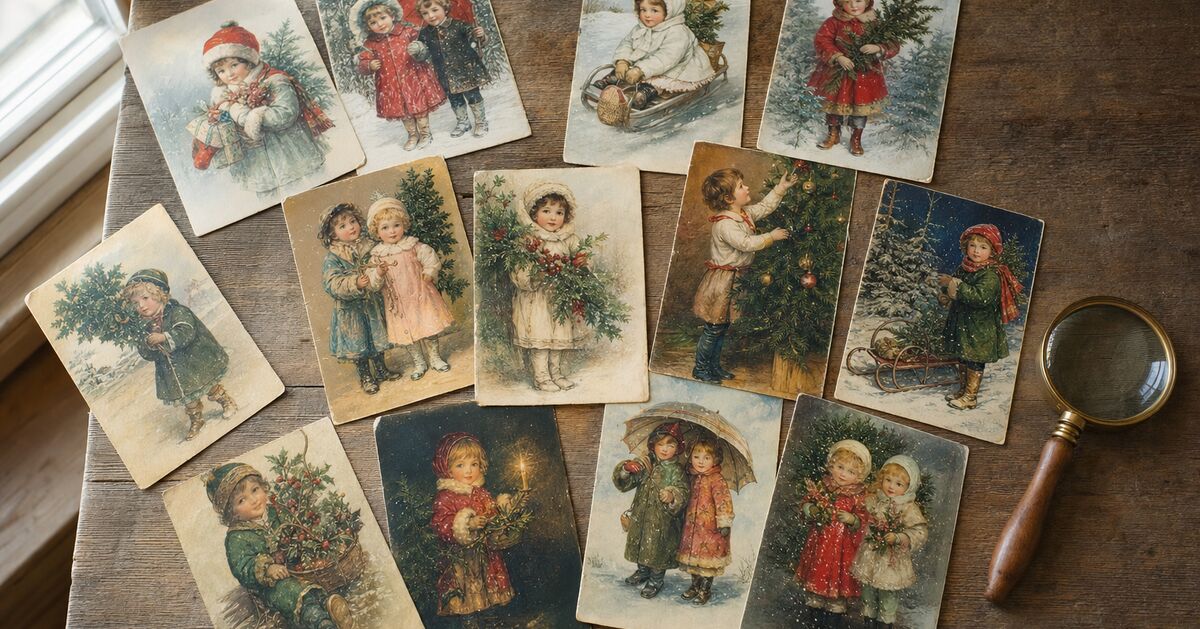
Artist-signed postcards are among the most consistently collectible cards in the hobby. Collectors generally report that a strong Ellen Clapsaddle Halloween card in fine condition brings a higher price than a common Clapsaddle Christmas child in so-so shape. Frances Brundage cards follow a similar curve - the subject and condition doing most of the work. If you've inherited or bought a collection of signed cards, knowing how to read those signals is the difference between a confident sale and leaving money on the table by not understanding what you have.
What are artist-signed postcards, and why do collectors care?
Artist-signed postcards are cards that carry the printed or hand-lettered signature of the illustrator who created the image. This was a deliberate marketing move by publishers during the golden age of postcards - roughly 1900 to 1920 - when illustration was a high-profile commercial art form and certain artists had genuine public followings. Publishers like Raphael Tuck, John Winsch, and the American publisher Samuel Schmucker's associated houses knew that putting a recognizable name on a card moved copies.
The signatures matter for a few reasons. First, they create a collecting category - someone who loves Clapsaddle's work can build a focused collection around her style, her holidays, her publishers. Second, they signal a card that was produced with more artistic intention than a generic view card of a courthouse. Third, the best artist-signed cards are genuinely beautiful objects. The illustration quality, the lithographic printing, and the design sensibility of the Edwardian era combine in ways that still hold up visually more than a century later.
If you want a broader sense of how the postcard era developed and why artist attribution mattered so much to publishers and buyers, the history of postcards gives useful context.
Who are the key artists, and what are their cards worth?
The artist-signed postcard field is wide. Here are the names that come up again and again in collector circles, along with honest notes on value.
Ellen Clapsaddle (1865 - 1934)
Clapsaddle is the best-known name in the field, and for good reason. She produced an enormous body of work - holiday cards above all, covering Christmas, Easter, Halloween, Thanksgiving, Valentine's Day, and the Fourth of July. Her style features rounded, rosy-cheeked children, clean compositions, and strong color. Most of her cards were printed by International Art Publishing Company (IAP) or by Wolf & Company.
Value ranges widely. Her Halloween cards, featuring black cats, jack-o'-lanterns, or children in costume, tend to draw the strongest prices among her work, especially in fine condition. Christmas and Easter cards are plentiful and tend to sell for modest amounts unless the design is unusual. Cards with children doing something active or expressive outperform static portrait-style compositions. Unsigned cards that bear her style but no signature are worth considerably less.
One nuance worth understanding: Clapsaddle's name appears on cards she did NOT illustrate, because publishers sometimes used her name on generic work after her style became popular. If the artwork doesn't match her known style - soft, warm, figurative - treat the signature with some skepticism and research the specific card before pricing it high.
Frances Brundage (1854 - 1937)
Brundage worked primarily for Raphael Tuck & Sons, which is one reason her cards are well documented - Tuck kept good records and their cards are identifiable by series number. Her subjects include children, Santa Claus, and holiday scenes, and her palette tends toward warmer, richer tones than Clapsaddle. Her Santa cards are particularly sought after.
Brundage cards in very good to excellent condition generally sell for more as common holiday subjects, with Santa and Halloween cards commanding a premium. Tuck series numbers on the back help collectors identify exactly which series a card belongs to, which matters because some series are scarcer than others. If you have Brundage cards, flip them over and note any series numbers - they're worth researching. The guide to Raphael Tuck postcards covers this publisher's output in more detail.
Samuel Schmucker (1879 - 1921)
Schmucker is arguably the most art-historically interesting of the American postcard illustrators. His work - particularly his "American Girl" series and his holiday designs - has an Art Nouveau influence that sets it apart from the softer illustration styles of his contemporaries. He worked primarily for John Winsch.
Schmucker cards are genuinely scarce compared to Clapsaddle or Brundage, and prices reflect that. Strong Schmucker designs in fine condition tend to command higher prices, with exceptional examples selling for even more at postcard shows and specialized auctions. His Halloween and Christmas series are the most coveted. The relatively small volume of his known postcard work - he died young - keeps supply tight.
Raphael Kirchner (1875 - 1917)
Kirchner was an Austrian artist whose glamorous, idealized women made him a star in European postcard collecting. His cards were widely distributed in America and show up in American collections regularly. His work is more explicitly decorative and Art Nouveau than the American holiday illustrators, and his collector base overlaps with the Art Nouveau print market.
Kirchner prices depend heavily on condition and series. Common Kirchner series in average condition sell for modest sums, while sought-after series with desirable subjects, such as his geisha series, can reach much higher prices in top condition.
Other names worth knowing
- Harrison Fisher - known for his "American Girl" illustrations, published by Reinthal & Newman. Desirable, with a large collector following.
- Philip Boileau - beautiful women in a soft, romantic style. Popular and relatively accessible at $10 to $40 for common cards.
- John Winsch artists (beyond Schmucker) - Winsch published strong Halloween and Christmas series, sometimes unsigned or signed by lesser-known artists. The Winsch imprint itself adds collector interest.
- Bernhardt Wall - known for his humorous Sunbonnet girls and Uncle Sam holiday cards. Affordable and fun.
- H.B. Griggs - prolific holiday artist, common but collected.
For a broader look at how condition affects all of these values - and why a crease or album crinkle can cut a card's price in half - the postcard condition guide is worth reading before you make any pricing decisions.
What specific factors move artist-signed postcard prices up or down?
Subject is the single biggest driver. Within any artist's body of work, certain holidays and themes collect at a premium:
- Halloween outperforms everything else in the artist-signed world. A Clapsaddle Halloween card will generally outsell an equivalent Clapsaddle Christmas card by a wide margin. Collector demand for Halloween material is deep and competitive.
- Santa Claus cards are perennially strong, especially unusual depictions - Santa in a non-red suit, Santa with a telephone, pre-Coca-Cola-era designs.
- Children actively doing things outperform children standing still. Movement, expression, and narrative beat static portraiture.
- Patriotic subjects - Fourth of July, Lincoln, Washington - have a dedicated collector following that keeps prices firm.
Publisher and printing quality matter more than many sellers expect. Cards printed by top-tier publishers - Tuck, Winsch, IAP - with rich lithographic color and embossing hold value better than later flat-printed editions of the same design. Embossed cards (where the image has a raised texture) carry a modest premium. Cards printed in Germany before World War I are widely considered superior in printing quality to domestic American printing of the same era - the guide to German-printed postcards explains the technical reasons why.
The signature itself must be clear and visible. A card where the artist's name has faded, been obscured by a postmark, or is barely legible sells at a discount to one with a clean, readable signature.
Used versus unused cards are less clear-cut in this category than in view cards. A postmark on an artist-signed card is not automatically a negative - in fact, a period postmark dating the use of the card to the year it was published can actually support authenticity and add a layer of historical interest. What hurts value is a postmark directly over the image, heavy ink bleed from the message on the back showing through to the front, or address writing across the picture side.
How do I identify what I actually have?
Start with the back of every card before you focus on the front. The back tells you:
- Publisher - look for a printed imprint, series name, or series number
- Printing origin - "Printed in Germany" is a quality signal; "Made in USA" narrows the date to after 1914 or so
- Series number - critical for Tuck cards and Winsch cards, useful for IAP
- Divided or undivided back - undivided backs (no line dividing address from message space) date before 1907; divided backs date from 1907 onward. This helps confirm whether an artist was working early or late in her career. The full breakdown is in the guide to divided and undivided backs.
- Postmark - if present, it dates the card's use, which helps confirm the publication era
Then look at the signature on the front. Note exactly how it's spelled, how it's positioned, and whether it appears printed (part of the lithograph) or added separately. A printed signature is standard and expected; a hand-signed card would be extraordinary and would need documentation to command a premium.
Cross-reference what you find against published references. The best physical reference for Clapsaddle is The Collector's Guide to Ellen Clapsaddle Postcards by Diane DeBlois and Cathe Pullen. For Brundage and Tuck series, the Tuck database maintained by collector organizations is useful. These references help you confirm whether a card is a known common design or something scarcer.
What should I expect when selling a collection of artist-signed cards?
Selling a focused artist-signed collection is different from selling a general view card collection. The buyer pool is smaller - but also more motivated. A collector who has been assembling a Schmucker set for five years will pay a fair price for cards that fill gaps; a general dealer who doesn't specialize may not know the difference between a $5 and a $150 Schmucker.
The guide to where to sell old postcards covers the full landscape of options - postcard shows, dealers, online marketplaces, and direct buyers - with the honest trade-offs of each. For artist-signed material specifically, postcard shows can be strong because specialized collectors attend them and can evaluate cards on the spot. The postcard shows and dealers page has more on how that market works.
If you're thinking about selling on eBay, artist-signed postcards do trade there, but results vary a lot based on how well the listing is written and whether the right collectors find it. The guide to selling postcards on eBay is honest about the effort involved.
One practical note: if your collection mixes artist-signed cards with general holiday cards, view cards, or other material, describe it as it is - the complete collection together. Don't try to parse out which cards are "the good ones" before getting an offer, because a buyer who wants the whole group is making a judgment about the full composition. Separating things out preemptively can actually complicate a sale rather than improve it.
Does condition matter as much for artist-signed cards as for other postcards?
Condition always matters, but the degree to which it cuts value depends on scarcity. For a common Clapsaddle Christmas child printed in large runs by IAP, a corner crease can steeply reduce the price proportionally, even though both prices are modest. For a rare Schmucker Halloween design, a collector may accept very good condition (a light crease or slight corner wear) because the card simply doesn't come up in fine condition often. Rarity and condition interact; neither factor works in isolation.
The condition issues that hurt artist-signed cards the most are:
- Writing on the image side (address or message written across the picture)
- Foxing or brown spots from moisture or age
- Fading of the color, especially reds and oranges which are fugitive in some lithographic inks
- Album damage - black adhesive residue from old album corners, tears from being stuck down
- Ink bleed from the back when heavy pen pressure was used by the original sender
Light postal cancellations that fall on the border or background of an image are often acceptable to collectors and don't carry the same penalty as writing or heavy ink bleed.
Questions people ask
Are Ellen Clapsaddle postcards worth a lot of money?
Some are, and some are quite common. Her Halloween cards tend to be the most valuable, with fine examples commanding the highest prices and rare designs going even higher. Her Christmas and Easter cards are abundant and typically sell for $5 to $25 unless the design is unusual or the printing is especially fine. The subject, publisher, condition, and whether the signature is clear all affect the price.
How can I tell if a postcard is actually signed by the artist or just printed with the artist's name?
On many artist-signed postcards from the golden age, the signature is part of the lithographic printing - it appears in the same ink and texture as the rest of the image. A hand-signed card would require a different ink, a different application, and would be verifiable under magnification. Printed signatures are the norm and are fully legitimate; they mean the artist authorized and signed off on the design, not that every individual card was personally autographed.
What's the difference between a common artist-signed card and a rare one?
Rarity comes from a combination of low original print run, subject matter that has heavy collector demand (Halloween above all), and survival rate. Some designs were printed in the hundreds of thousands; others were short runs for regional or specialty markets. Publisher records and collector databases help identify which series are genuinely scarce. A card from a known rare series in a desirable subject is rare; a card from a mass-market series in a plentiful subject is common, regardless of how old it is.
Should I sell artist-signed postcards individually or keep the collection together?
Keeping the collection together and describing it as a whole is often the cleaner, faster path. Splitting a collection to sell card by card takes significant time and expertise, and the logistics of individual listings, packing, and shipping add up quickly. A buyer interested in a complete artist-signed collection can assess it as a group and make a straightforward offer. If you want to describe what you have and explore that option, the sell page is the place to start - just describe the collection as it sits, artist names you recognize, approximate number of cards, and general condition.
Where can I learn more about the postcard collecting hobby as a whole?
The guide to deltiology is a good starting point - it covers how the hobby is organized, what collectors look for, and how the market works. The postcard glossary is useful if terms like "divided back," "lithograph," or "embossed" are new to you. And the artist-signed postcards overview goes deeper on the full range of artists and publishers active during the golden age.
About this guide
- Research: Mike Ferreira
- Last reviewed: October 28, 2026
- Primary references: University & extension 1 · Manufacturer & industry 1 (listed below)
- Claim audit: 12 consequential claims checked against the sources below on Oct 28, 2026; wording the sources could not carry was removed (claim-by-claim)
- Spotted an error? Tell me and I will fix it.
Sources & further reading
- University of Delaware Library: postcard collections and finding aids (University of Delaware Library)
- Winterthur Museum: illustrated trade cards and printed ephemera research (Winterthur Museum, Garden & Library)
Revision history (1)
- Oct 28, 2026 - Pre-publish editorial QA: 2 flagged, 2 softened; claim audit: 12 claims, 9 rewritten
Claim-by-claim audit (12 checked)
- “Collectors generally report that a strong Ellen Clapsaddle Halloween card in fine condition brings a higher price than a common Clapsaddle Christmas child in so-so shape.” (rewritten to what the article can stand behind)
- “Her Halloween cards, featuring black cats, jack-o'-lanterns, or children in costume, tend to draw the strongest prices among her work, especially in fine condition.” (rewritten to what the article can stand behind)
- “Christmas and Easter cards are plentiful and tend to sell for modest amounts unless the design is unusual.” (rewritten to what the article can stand behind)
- “Brundage cards in very good to excellent condition generally sell for more as common holiday subjects, with Santa and Halloween cards commanding a premium.” (rewritten to what the article can stand behind)
- “Strong Schmucker designs in fine condition tend to command higher prices, with exceptional examples selling for even more at postcard shows and specialized auctions.” (rewritten to what the article can stand behind)
- “Common Kirchner series in average condition sell for modest sums, while sought-after series with desirable subjects, such as his geisha series, can reach much higher prices in top …” (rewritten to what the article can stand behind)
- “Philip Boileau's beautiful women in a soft, romantic style are popular and relatively accessible for common cards.” (rewritten to what the article can stand behind)
- “A Clapsaddle Halloween card will generally outsell an equivalent Clapsaddle Christmas card by a wide margin.” (rewritten to what the article can stand behind)
- “Cards printed in Germany before World War I are widely considered superior in printing quality to domestic American printing of the same era - the [guide to German-printed postcard…” (reasoning shown in the article)
- “Undivided backs (no line dividing address from message space) date before 1907; divided backs date from 1907 onward.” (reasoning shown in the article)
- “For a common Clapsaddle Christmas child printed in large runs by IAP, a corner crease can steeply reduce the price proportionally, even though both prices are modest.” (rewritten to what the article can stand behind)
- “Her Halloween cards tend to be the most valuable, with fine examples commanding the highest prices and rare designs going even higher.” (rewritten to what the article can stand behind)
A question first?
Ask before you send anything
Not sure the collection is worth a quote, or what to photograph? Just ask. Every message comes straight to me, and I answer each one myself.